Jan
Hair Tips
How to Choose a Reliable Hair Factory in Vietnam: A Buyer’s Guide
How to choose a hair factory in Vietnam is a critical question for wholesale buyers seeking consistent quality, transparent production, and long-term sourcing stability.
This guide explains the key factors buyers should evaluate when working with Vietnamese hair manufacturers, from production capability to quality control and export experience.
Why Vietnam Has Become a Key Hair Sourcing Hub
Vietnam has emerged as one of the most trusted sources for human hair extensions. Buyers value Vietnamese hair for its strength, natural texture, and long lifespan. The country also offers a skilled workforce with decades of experience in hair processing.
According to Vietnam Investment Review, Vietnam’s light manufacturing sector has grown rapidly due to stable labor quality and export-focused production models. This growth includes human hair processing for global markets.
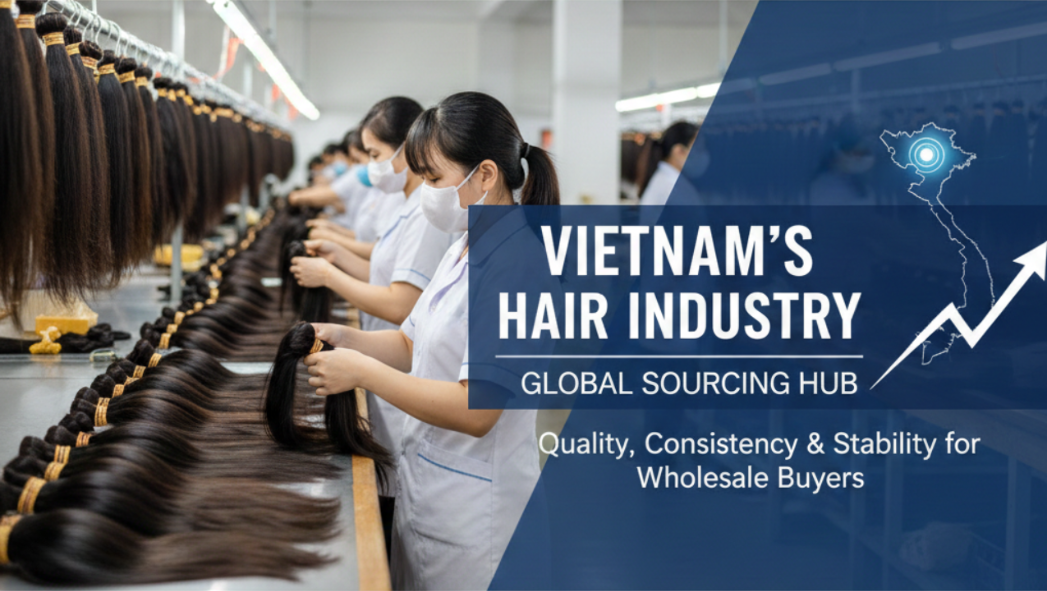
A report by Mordor Intelligence also notes rising demand for ethically sourced human hair, especially from Southeast Asia. Vietnam benefits from shorter supply chains and stronger quality control compared to many reselling markets.
Hair Factory vs. Hair Vendor: Understand the Difference
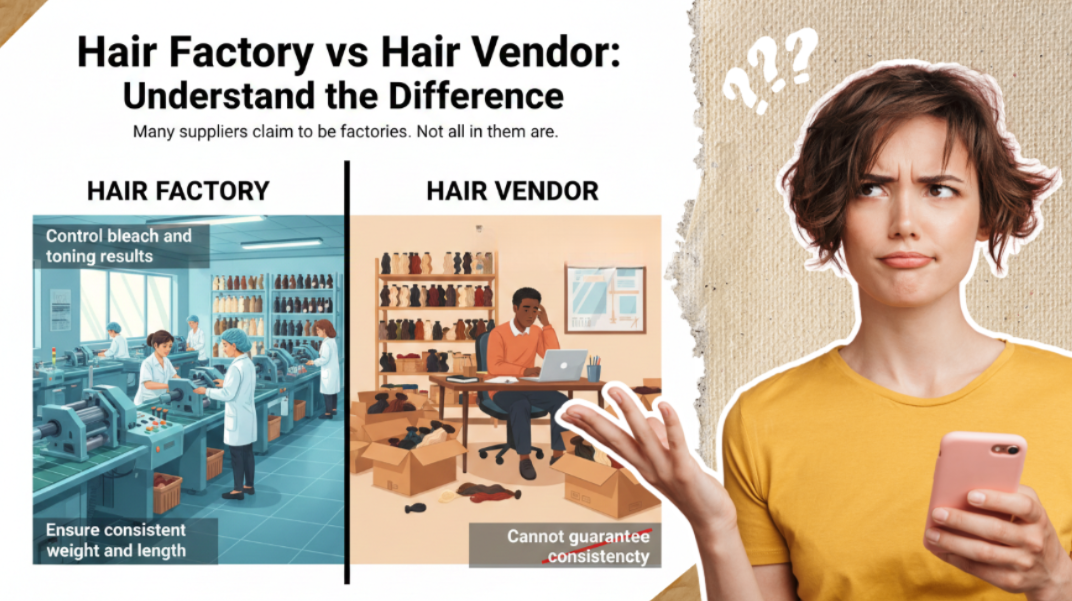
Many suppliers claim to be factories. Not all of them are.
A hair factory controls production in-house. It manages sorting, processing, and quality checks. A hair vendor often sources finished hair from multiple places and resells it.
Factories can:
- Control bleach and toning results
- Maintain stable curl patterns
- Ensure consistent weight and length
Vendors usually cannot guarantee these factors across large orders. This difference matters most for wholesale buyers and salon chains.
Key Factors on How to Choose a Hair Factory in Vietnam
1. In-House Production Capability
A reliable factory handles core steps internally. These include hair selection, processing, and finishing. Ask for real production photos or videos. A video call inside the workshop helps confirm authenticity.
Industry guidance from Professional Beauty Association (PBA) highlights that in-house control reduces variation in texture and color. This matters for repeat wholesale orders.
2. Quality Control at Every Stage
Strong factories apply quality checks at multiple points. They inspect cuticle direction, remove short strands, and verify length accuracy. These steps prevent tangling and shedding after installation.
Research published in the International Journal of Cosmetic Science shows that cuticle alignment directly affects hair durability and shine. Factories that skip this step often deliver unstable quality.
3. Custom Capability for Wholesale Buyers
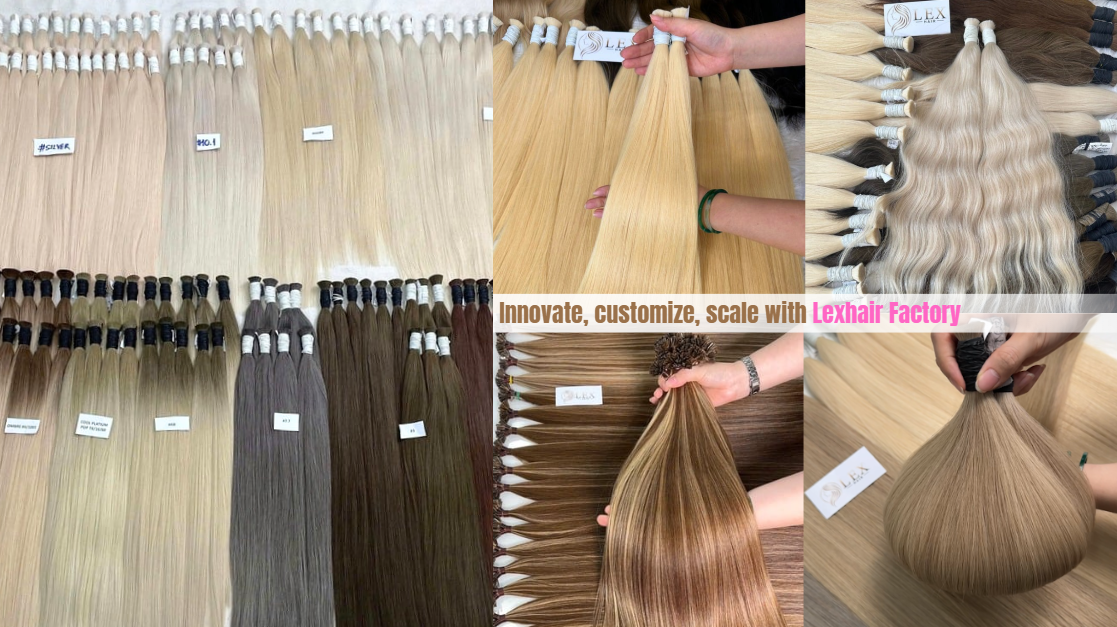
Wholesale buyers often need more than stock items. A good factory supports custom curl patterns, special color blends, and private labeling. This flexibility helps salons and brands stand out.
Factories with custom capability usually maintain separate production lines. This setup avoids cross-contamination between orders.
4. Transparency and Communication
Clear communication signals professionalism. Reliable factories share real-time updates and production visuals. They also explain what they can and cannot do.
According to Harvard Business Review, supplier transparency builds long-term trust and reduces sourcing risk. This principle applies strongly in hair manufacturing.
5. Export Experience and Logistics Knowledge
Export-ready factories understand packing standards and documentation. They know how to protect hair during long-distance shipping. This experience reduces delays and damage.
Buyers should confirm shipping methods and past export markets. Factories with global clients usually handle logistics more smoothly.
Common Mistakes Buyers Make When Choosing a Factory
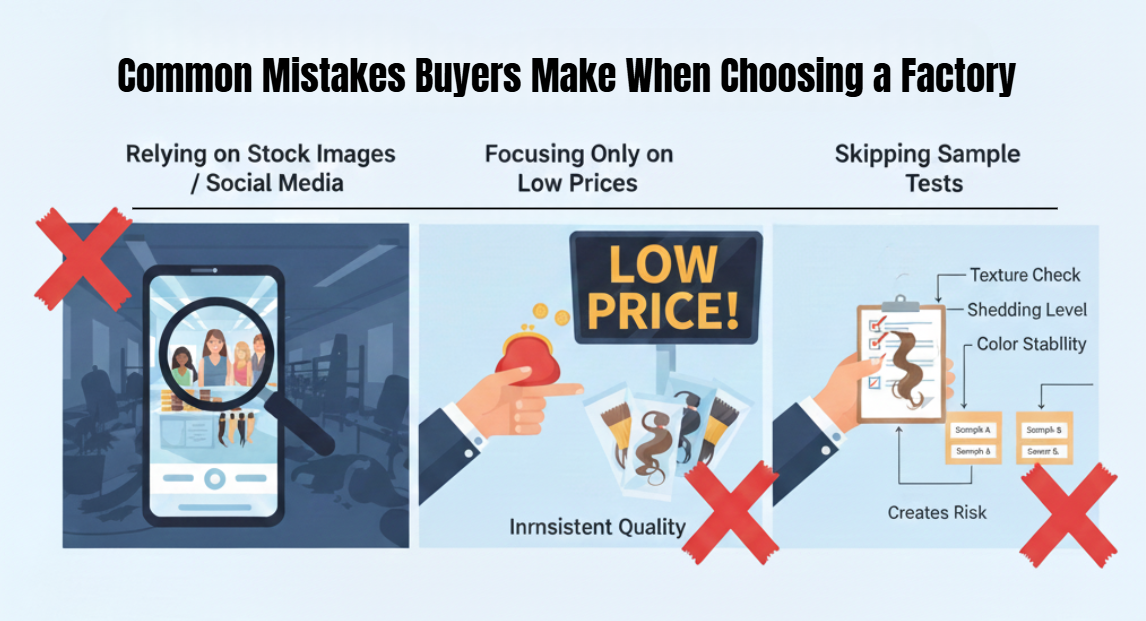
Many buyers rely on stock images or social media posts. These materials often hide the real production source. Others focus only on low prices, which often leads to inconsistent quality.
Skipping sample tests also creates risk. Testing a small order reveals real texture, shedding level, and color stability.
A Practical Example From a Vietnamese Hair Factory
Some Vietnamese hair factories focus on controlled production rather than mass volume. These factories prioritize process transparency, stable output, and realistic lead times over aggressive scaling.
At Lexhair Factory, production is managed in-house with defined quality checkpoints at each stage, from raw hair selection to final finishing. This structure allows the team to monitor cuticle alignment, color consistency, and curl stability more closely across wholesale orders.
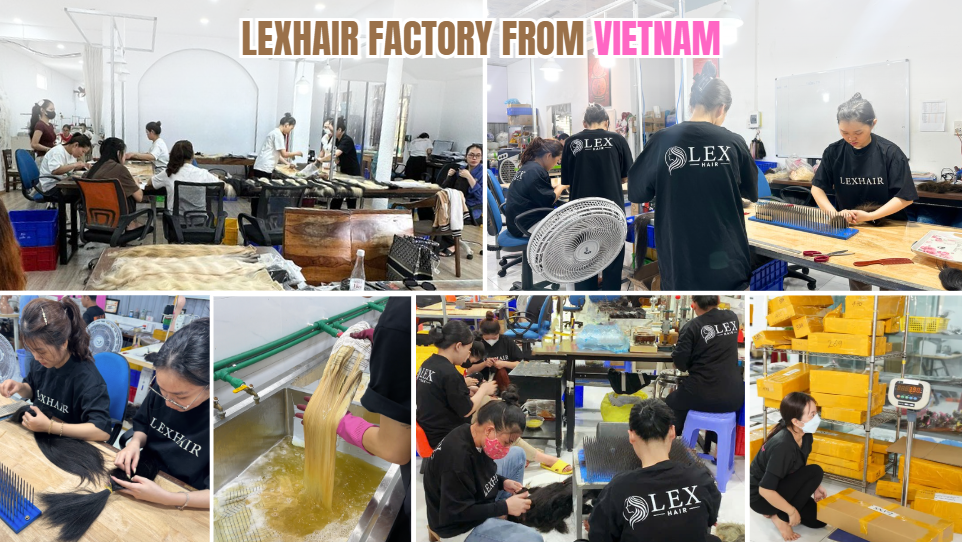
Instead of accepting every request, the factory evaluates whether a custom order aligns with its technical capacity and quality standards. This approach helps reduce inconsistencies and minimizes rework, especially for salon chains and distributors who require repeatable results.
By maintaining clear communication and offering visual production updates when needed, Lexhair Factory positions itself as a manufacturing partner rather than a short-term supplier, supporting buyers who value consistency and long-term sourcing reliability.
Final Tips for First-Time Wholesale Buyers
Start with a sample order. Ask for real factory videos. Confirm quality standards before scaling. Choose partners who explain their process clearly.
A reliable hair factory does more than sell hair. It supports your business growth through consistency and transparency.
Lexhair Factory | Contact Information & Hair Catalogue
WhatsApp
European-tone hair: (+84) 96 924 1128
Wavy/Curly hair/Raw hair: (+84) 97 809 1128
Instagram
Lexhair Factory’s Main Instagram
Lexhair Factory’s Wavy/Curly Raw Hair Instagram
Website
Lexhair Factory Vietnam