
Jan
Hair Tips
Lace Frontal & Lace Closure: Complete Guide for Professional Buyers
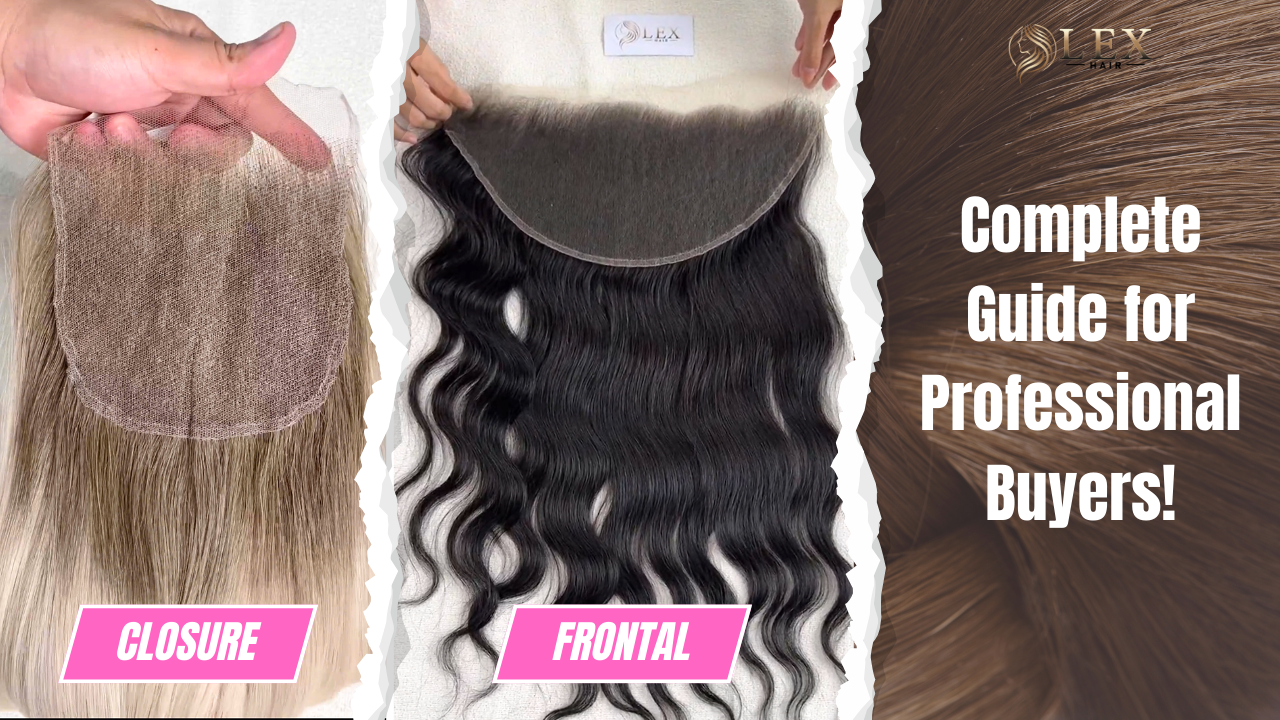
When professional buyers source human hair for wigs or custom units, they often compare lace frontal vs lace closure to decide which product fits their market, budget, and client needs.
Both products play essential roles in modern wig construction, but they differ in coverage, styling flexibility, cost, and installation requirements. Understanding these differences helps salons, wholesalers, and distributors make informed decisions and avoid costly mistakes.
This guide highlights the key differences and practical considerations for wholesale buyers and salon owners, with insights directly from the Lexhair factory in Vietnam.
What Is a Lace Closure?
A lace closure is a small lace piece that sits at the crown or parting area of a wig or sew-in. Common sizes include 4×4, 5×5, and 6×6 inches, making closures easy to install and integrate.
Closures offer simplicity and cost-effectiveness. They create a clean, natural-looking part without needing much glue or adhesive. Since closures cover a smaller area, they experience less tension and last longer when clients wear them daily.
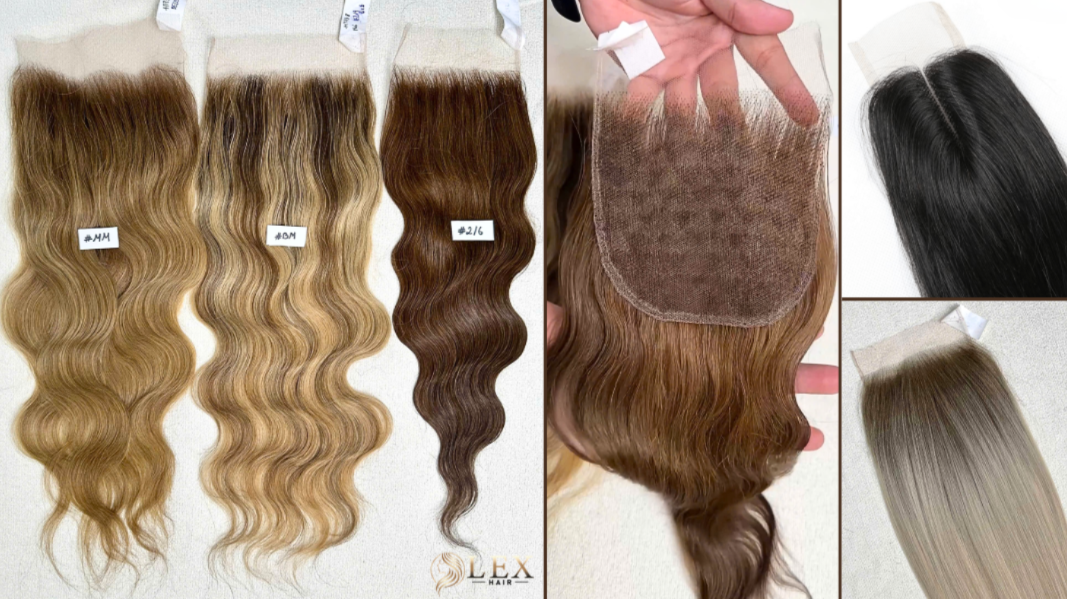
However, closures cannot replicate a full hairline. Styling options remain limited, and high ponytails or slicked-back looks may reveal the lace edge.
What Is a Lace Frontal?
A lace frontal extends across the entire front hairline, typically from ear to ear. Popular sizes include 13×4 and 13×6 inches, providing deeper parting space and greater styling freedom.
Lace frontals require more handwork during production. Factories ventilate the hair, pluck the hairline, and bleach knots to achieve a natural look. This additional effort increases production time and cost.
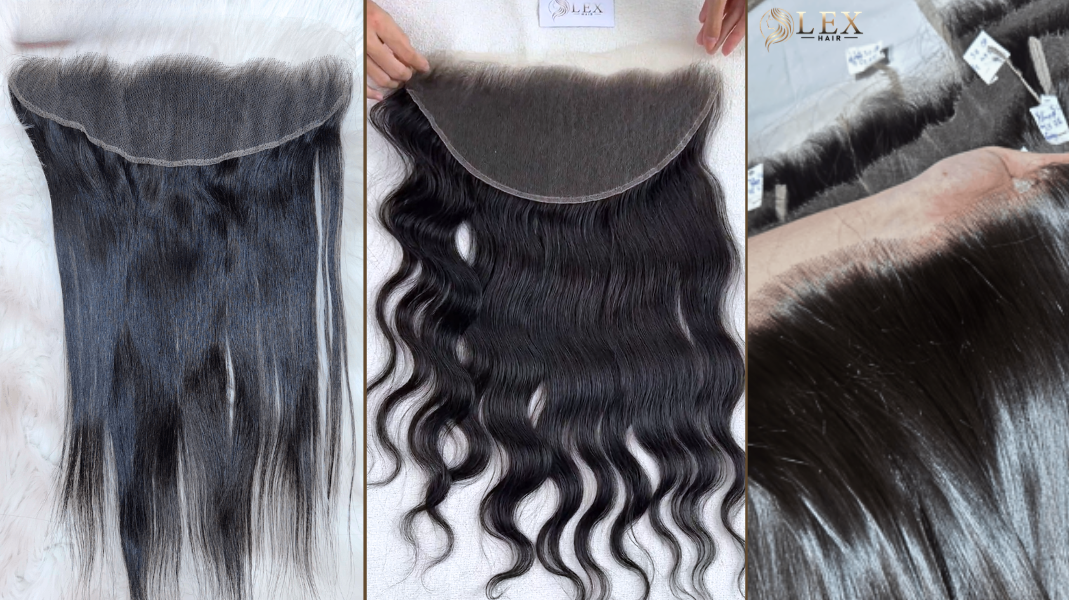
For salons and high-end clients, lace frontals create the most realistic hairline. Stylists can part the hair in multiple directions or pull it back entirely without revealing the lace. Frontals offer maximum styling flexibility, but they require professional installation and regular maintenance to prevent lifting or damage.
Lace Frontal vs Lace Closure: Key Differences
Understanding the differences helps buyers choose the right product for their customers.
- Coverage: Closures cover only the crown or part, while frontals recreate the full front hairline.
- Styling: Closures offer limited styling; frontals allow multiple parting options and updos.
- Installation: Closures suit beginners; frontals need professional skills.
- Cost: Closures cost less due to smaller lace size and simpler production; frontals cost more but deliver higher perceived value.
- Market positioning: Closures perform well in entry-level and mid-range markets. Frontals cater to premium clients and salons seeking high-end results.
Lace Types and Material Quality
Beyond size and coverage, the lace material affects comfort, durability, and realism. Buyers often choose among HD lace, transparent lace, and Swiss lace.
- HD lace: Ultra-thin, blends seamlessly with most skin tones.
- Transparent lace: Flexible and versatile, ideal for wholesale markets.
- Swiss lace: Soft, breathable, and durable, suitable for repeated installations.
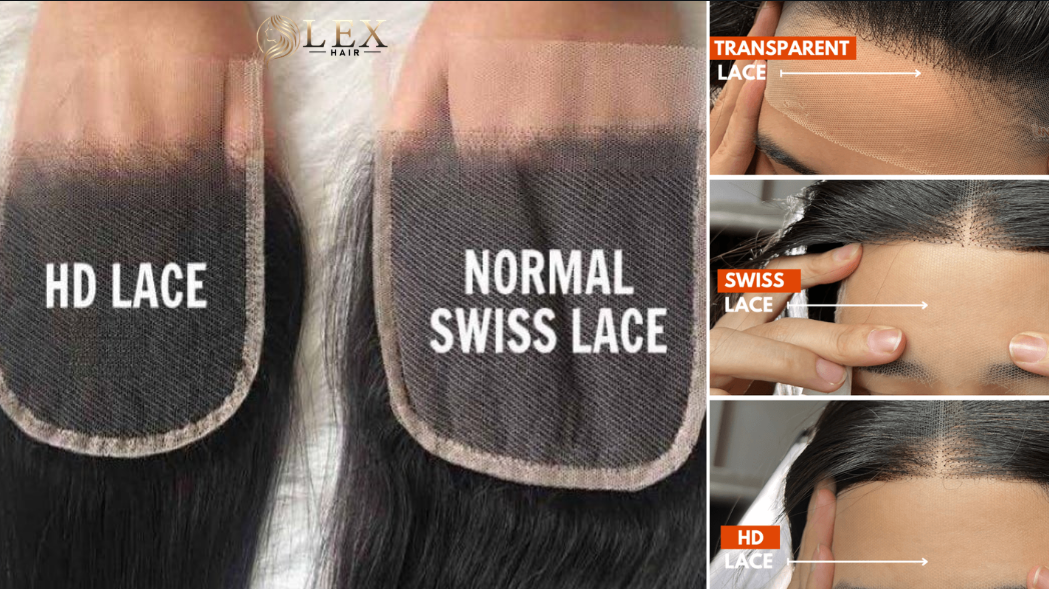
Research on lace and textile materials shows that finer lace structures improve airflow and scalp comfort, which explains the rising popularity of HD and Swiss lace in professional wig manufacturing.
Customization and Styling Considerations
Customization distinguishes lace frontals from closures. Closures generally require minimal adjustment, focusing on defining the part. Frontals need precise hairline plucking, single or double knot ventilation, and controlled knot bleaching.
Factory studies show that single-knot ventilation with professional bleaching creates the most natural scalp illusion. While this process increases production time, buyers gain higher-quality, premium products that satisfy salon clients and end users.
Which Option Should Buyers Choose?
The choice depends on the buyer’s target market.
- Salons and stylists: Prefer frontals for clients who want a natural hairline and versatile styling.
- Retailers and wholesalers: Favor closures for daily wear, durability, and lower cost.
- Balanced approach: Many buyers include both products in their inventory to serve different customer segments effectively.
Why Choose a Trusted Factory?
Factory quality determines lace performance, lifespan, and customer satisfaction. At Lexhair Vietnam, the factory produces lace frontals and closures using premium human hair and professionally graded lace.
The factory supports OEM and ODM production, offering customization options such as pre-plucked hairlines, baby hairs, HD or Swiss lace, and bulk supply for international buyers. Working directly with Lexhair allows buyers to control costs, maintain consistent quality, and meet delivery deadlines efficiently.
Conclusion
Professional buyers who understand lace frontal vs lace closure can optimize their inventory and satisfy clients across market segments.
Closures offer simplicity, durability, and cost efficiency, while frontals deliver realistic hairlines and styling versatility. By sourcing from a reliable factory like Lexhair, buyers ensure high-quality products, flexible customization, and wholesale scalability.