
Aug
Hair Tips
How to Become a Hair Extension Reseller: A Beginner’s Guide
The hair extension industry is one of the most profitable niches in beauty retail. But if you want to become a hair extension reseller the right way – reliable supplier, realistic pricing, clear plan – that’s what separates a business that grows from one that stalls after the first order.
Here’s what you need to know before placing your first order.
1. Choose Your Business Model
- Retail reseller – buying bundles or wigs in small quantities, selling directly to customers via social media or an online store.
- Salon supplier – selling extensions to salons and stylists who install them for clients.
- Private label brand – buying in bulk from a factory, packaging under your own brand, selling at scale.
- Dropshipping – selling without holding inventory; your supplier ships directly to the customer. Lowest capital to start, but thinner margins and no quality check before it reaches the customer.
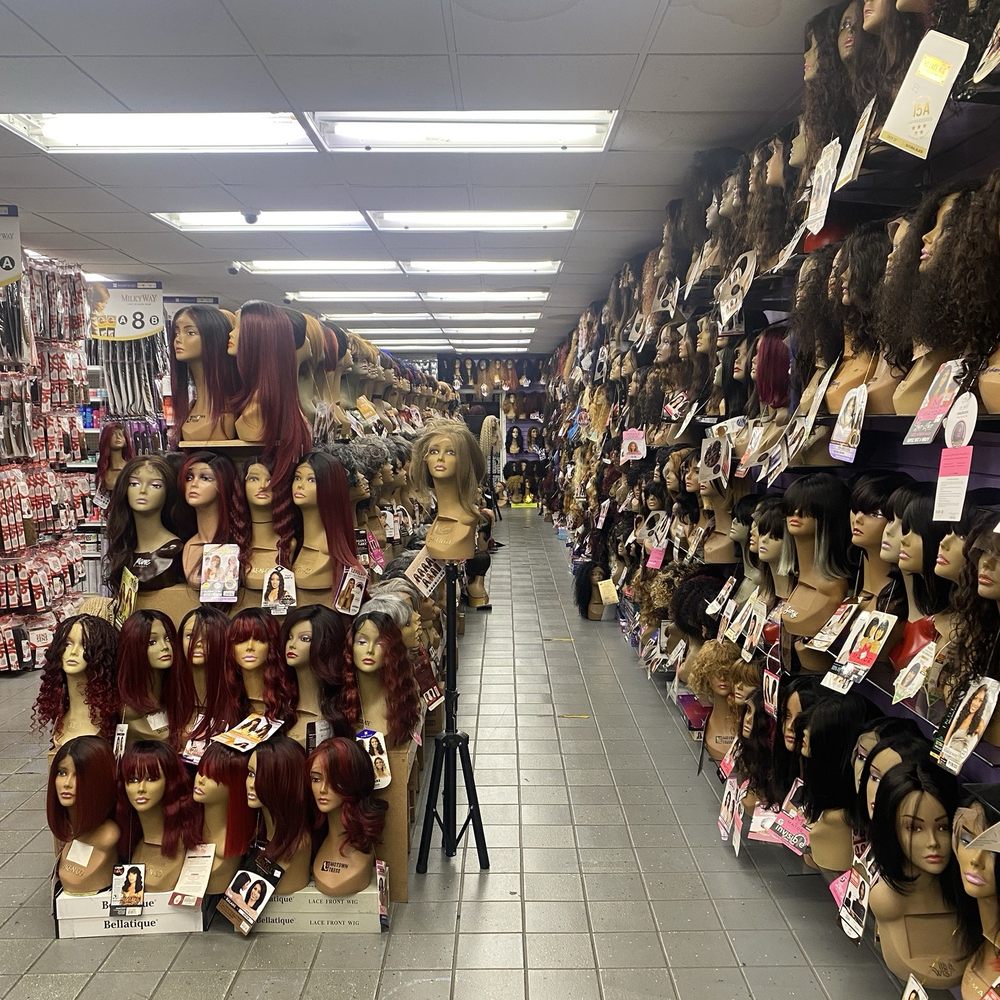
Retail, salon supply, and private label all require holding inventory; dropshipping doesn’t – that’s the main trade-off between control and startup capital. Many people who want to become a hair extension reseller start with dropshipping or retail, then move into private label as they grow.
2. Learn the Hair Types Before You Sell Them
Every hair extension reseller needs to understand what they’re selling, even without a technical background.
- Raw hair – single donor, cuticles intact, never chemically processed. Most durable and natural-looking, also the most expensive.
- Virgin hair – unprocessed but often multi-donor, so quality varies more.
- Remy hair – cuticles aligned, but may be chemically treated.
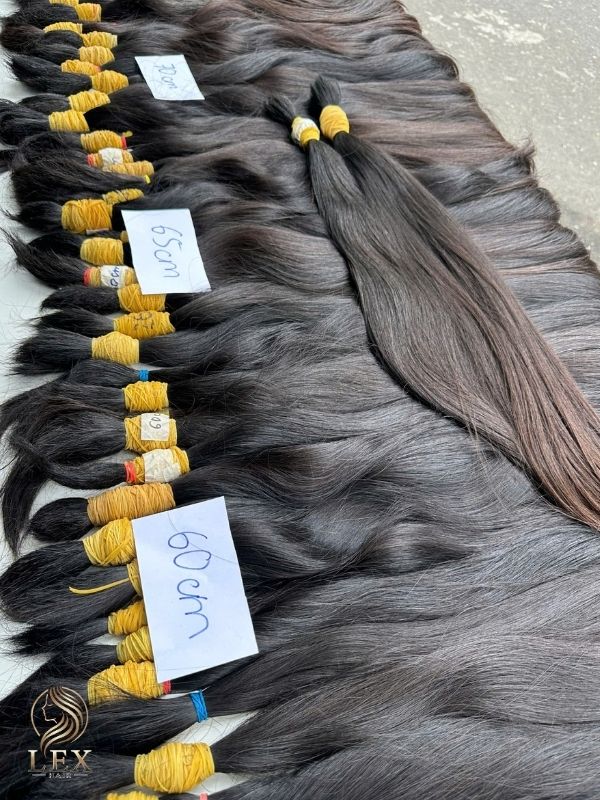
For salons or high-end clients, raw hair is usually worth the cost – it holds curl pattern, resists tangling, and can last a year with proper care.
3. Find a Supplier You Can Trust as a Hair Extension Reseller
This step makes or breaks a reseller business. Look for:
- Direct factory sourcing – manufacturer, not a reseller themselves
- Live video calls to see the hair or factory in real time before committing to bulk orders
- Consistency across batches
- Clear MOQ and pricing tiers
- Responsive communication
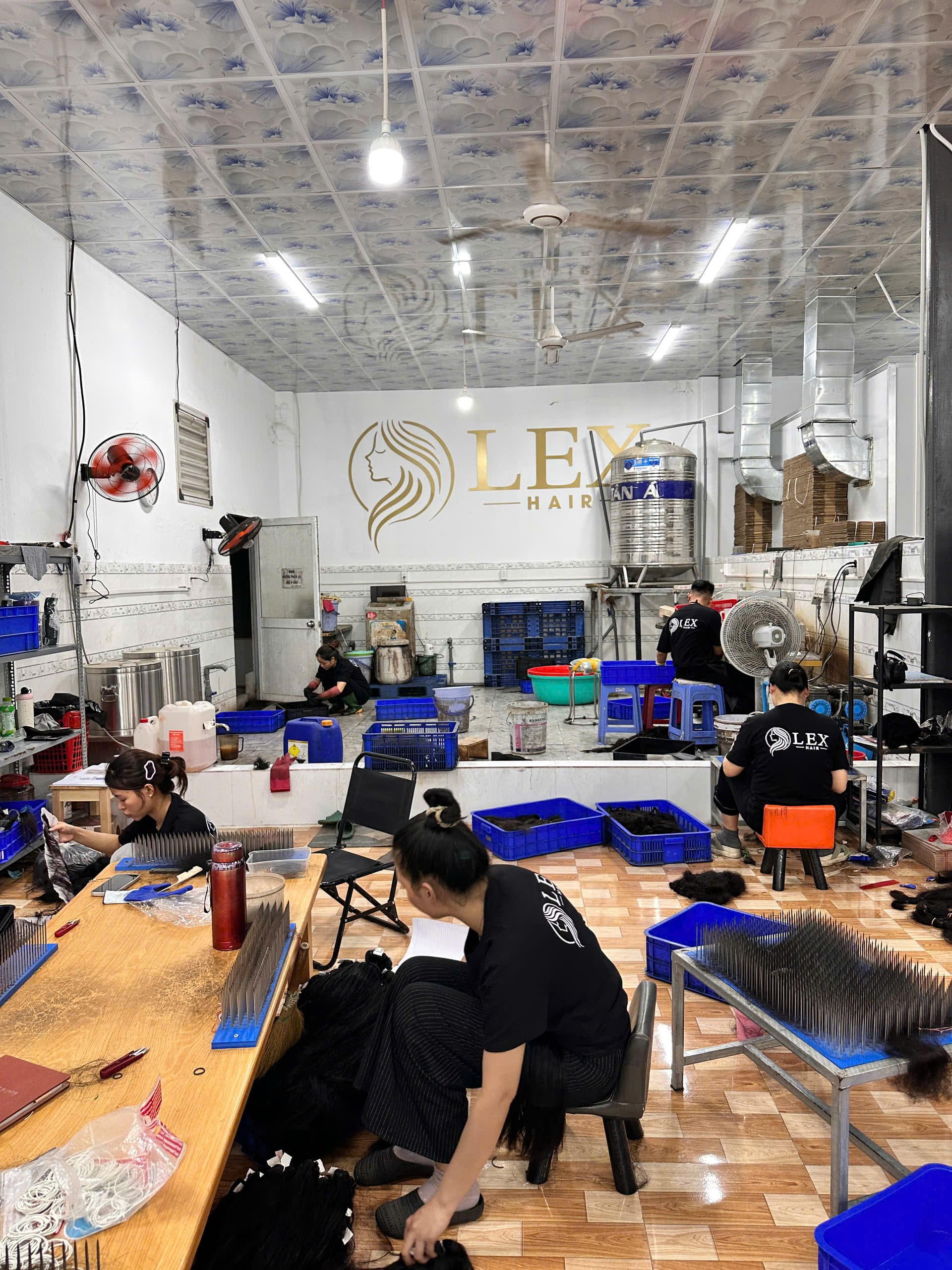
Vietnam is one of the most trusted sourcing hubs globally for raw, single-donor human hair, which is why many entrepreneurs choose to become a hair extension reseller by partnering with a Vietnamese factory.
4. Start Small, Then Scale
You don’t need a large first order to evaluate a supplier – a small, targeted trial order tells you more than any sample photo.
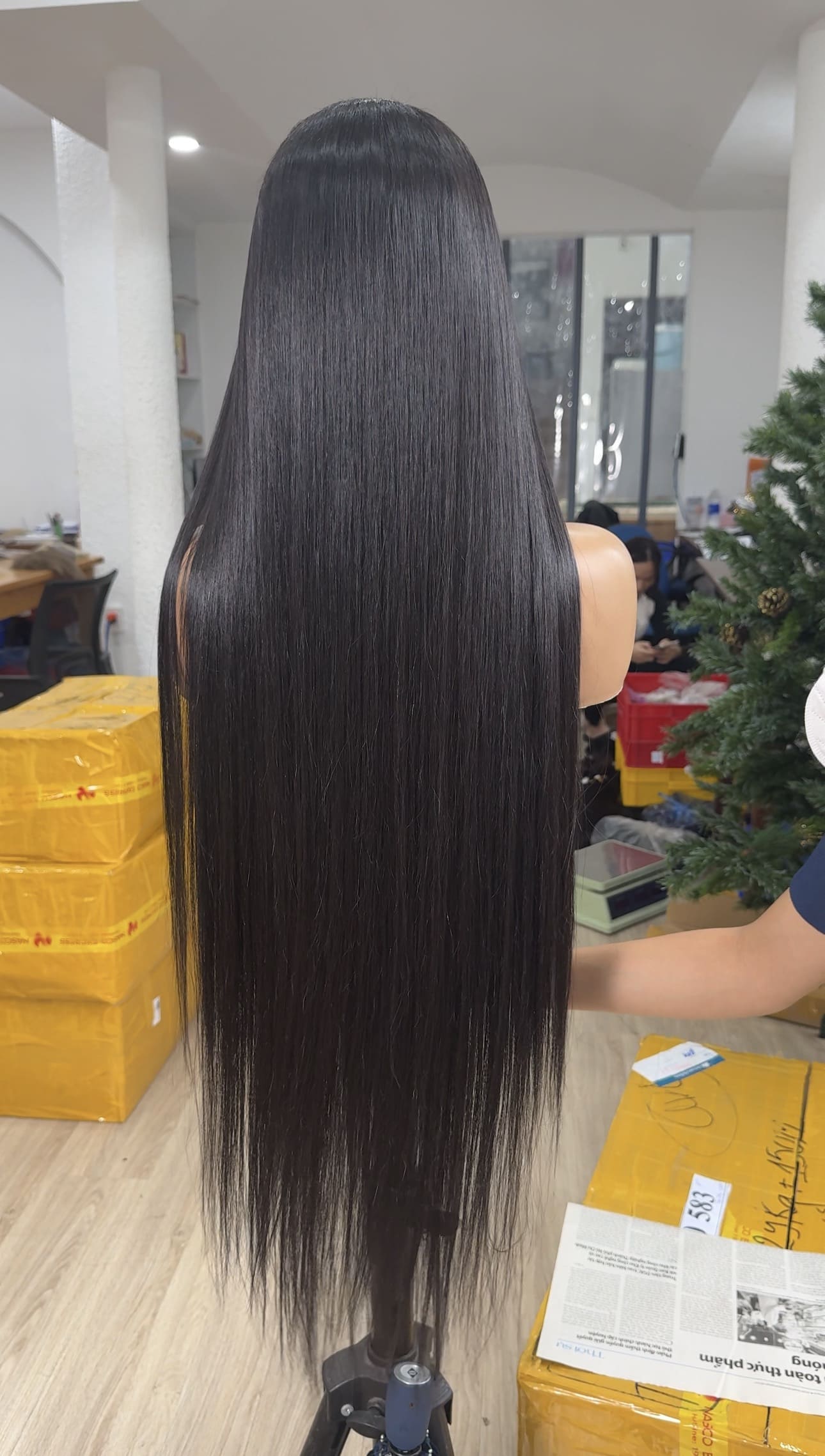
- For wigs: order around 3 bundles plus one lace closure or frontal, and have the factory make it into a finished wig. This lets you check both the raw hair quality and the factory’s wig-making skill (ventilating, lace work, finishing) in one order.
- For extensions (keratin tip, tape-in, etc.): order 2-3 bundles to check consistency across bundles within the same order – texture, color match, and craftsmanship should be uniform bundle to bundle.
Avoid ordering just 1 bundle to test – the quantity is too small to judge consistency, and a single bundle can look good even if the batch itself is inconsistent.
Once you see how the hair and finished product hold up, you can negotiate better pricing on larger, repeat orders.
5. Price for Profit as a Hair Extension Reseller
Pricing is where a lot of new resellers lose money without realizing it – they price based on what feels competitive instead of what the numbers actually support.
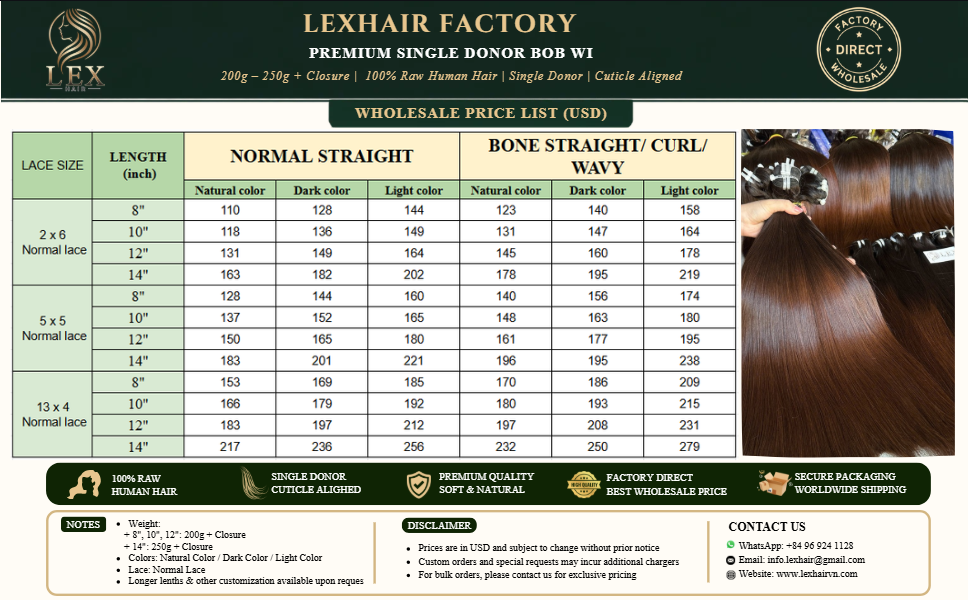
- Calculate your full landed cost – not just the product price, but shipping, customs/duties if applicable, and any packaging or branding costs. This is your real baseline, not the supplier’s quoted price per bundle.
- Add a margin that reflects your model – dropshipping and retail sellers often work with 30 – 80% markup on raw hair, while private label brands may price higher once branding and customer experience are factored in. There’s no single “right” number – it depends on your market, your costs, and how differentiated your offer is.
- Check what comparable quality sells for in your target market before finalizing your price – search what other sellers of raw or single-donor hair are charging, not generic extension sellers using lower-grade hair.
Don’t undercut yourself to match sellers using lower – quality hair – pricing too low is one of the fastest ways for a new hair extension reseller to lose margin, and it trains customers to expect a price you can’t sustain once costs rise.
6. Build Trust Before You Build Volume
In a market full of sellers making similar claims, trust is what actually converts a browser into a buyer – and what turns a first-time buyer into a repeat customer.
- Share real photos and videos, not stock images – customers buying raw or virgin hair want to see the actual texture, shine, and how it behaves, not a generic supplier photo used by dozens of other sellers.
- Be transparent about hair type (raw vs. virgin vs. remy) – customers who feel misled about what they’re buying rarely come back, and word travels fast in this niche.
- Offer a clear return or exchange policy – even a simple, clearly stated policy reduces hesitation at checkout more than most sellers expect.
- Highlight your supplier relationship if it’s a reputable, direct-from-factory source – mentioning where and how the hair is sourced (single donor, factory-direct, Vietnam-sourced) gives customers a reason to trust you over a seller who can’t answer basic sourcing questions.
Final Thoughts on Becoming a Hair Extension Reseller
Success as a hair extension reseller comes from understanding hair types, vetting suppliers carefully, and pricing with margins in mind – not racing to the bottom. Treat your supplier relationship as a partnership.
Looking for a factory-direct source of raw, single – donor hair with transparent MOQ and pricing? LexHair Factory works with resellers, salons, and private label brands across Europe, the US, and Africa – get in touch for samples and pricing.